
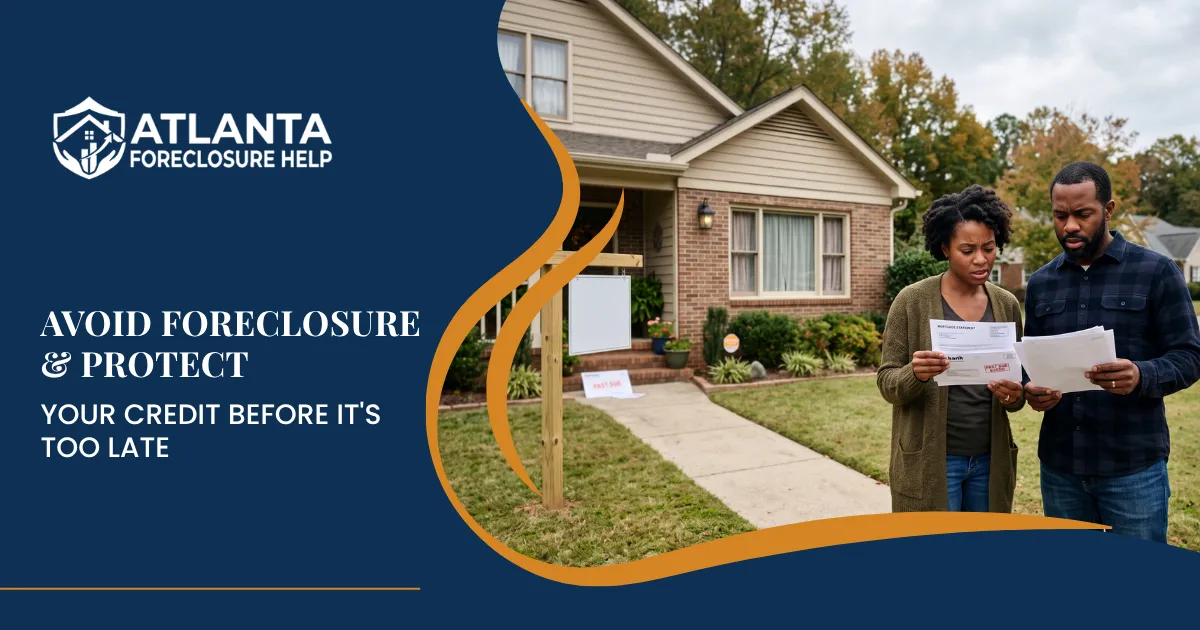
Avoid Foreclosure & Protect Your Credit Before It's Too Late
Avoid foreclosure and protect your credit that's the goal the moment a missed payment notice shows up in your mailbox, and panic is the natural first reaction. Maybe you've fallen behind after a job loss. Maybe medical bills or a divorce threw your budget off track. Whatever the cause, the fear is the same: losing your home and watching your credit take a hit that follows you for years. Here's what matters most right now you have more time and more options than you think. This guide breaks down exactly how homeowners in Georgia are stopping foreclosure, protecting their credit, and moving forward with a real plan instead of guesswork.
Understanding Why Homeowners Fall Behind
That real plan starts with understanding how you got here, because you are far from the only one. Missed mortgage payments rarely come from carelessness. They come from life happening faster than a budget can adjust.
Job loss, medical bills, divorce, and rate increases on adjustable mortgages are the most common triggers, and none of them are a reflection of poor planning. Most homeowners who fall behind were current on their mortgage for years before one event changed everything.
Recognizing the cause matters because it shapes the solution. A temporary hardship calls for a different fix than a permanent income change, and knowing which one you're dealing with is the first real step toward a plan that actually works.
Job loss or reduced income that makes the current payment unaffordable
Medical emergencies that drain savings meant for the mortgage
Divorce or separation that splits one household income into two
Adjustable-rate increases that raise payments without warning
Inherited property with missed payments already in place
Simple timing gaps between selling one home and closing on debt from another
Foreclosure Prevention Services: How Professional Help Changes the Outcome
Once you understand why you fell behind, the next question is what actually stops the process before it goes further. This is where foreclosure prevention services earn their reputation, because most homeowners don't know which options apply to their exact situation.
What Foreclosure Prevention Services Actually Do
A foreclosure prevention specialist reviews your full financial picture and matches it against every program you might qualify for, from loan modification to forbearance to a short sale. This isn't guesswork or a form letter it's a personal case review built around your income, your lender, and your timeline. Most homeowners are surprised to learn how many programs exist that they never knew to ask about. That knowledge alone often changes the entire outcome of a case.
Why Timing Changes Everything
Georgia's foreclosure process is non-judicial, which means it can move faster than homeowners expect once a notice of default is filed. Waiting even a few extra weeks can quietly remove options that were available at the start. Acting the moment you fall behind, rather than after a formal notice arrives, keeps far more paths open. Time is genuinely the most valuable resource in a foreclosure case.
The Difference Between DIY and Professional Negotiation
Homeowners can technically contact their lender directly, but most lender representatives are trained to follow a script, not to find you the best outcome. A specialist who negotiates with lenders regularly knows what documentation gets a case approved and what gets it sent back for resubmission. That experience routinely shaves weeks off a process that otherwise stalls out. It's the difference between hoping for a good outcome and building one.

Stop Foreclosure Assistance: What the Process Actually Looks Like
Knowing that professional help exists is one thing seeing exactly how stop foreclosure assistance unfolds makes the whole idea feel far less intimidating.
The Initial Case Review
Everything starts with a confidential conversation about your mortgage balance, your income, and how many payments you've missed. This isn't a sales pitch. It's an honest assessment of where you stand and what's realistically available to you. A good specialist will tell you plainly if foreclosure prevention isn't possible, rather than stringing you along.
Contacting Your Lender
Once your situation is clear, your specialist reaches out to your lender directly to open a dialogue and request any required forbearance or review period. Lenders are far more responsive to a structured, documented request than a homeowner calling in a panic. This step alone often buys crucial time. It also puts the process on the lender's radar as an active case, not a silent default.
Building Your Hardship Package
Most solutions require a hardship letter, income documentation, and a clear explanation of what changed and why. This paperwork is more important than most homeowners realize, since an incomplete package is the single biggest reason applications get delayed or denied. A specialist assembles this package correctly the first time. That precision is often what separates a fast approval from months of back and forth.
Reaching a Resolution
Once the lender reviews everything, you'll get a decision on modification, forbearance, or an alternative path forward. If the answer isn't what you hoped for, there are usually still other options left to pursue, from a short sale to a structured repayment plan. The goal at every stage is the same: resolve the situation before it turns into a completed foreclosure.
Mortgage Hardship Solutions Worth Knowing About
Every case above eventually leads to choosing one specific mortgage hardship solution, and knowing what's actually on the table makes that decision far less overwhelming.
Most homeowners assume their only choice is to keep paying or lose the house, but that's rarely true. Georgia homeowners typically have several structured paths depending on whether the hardship is temporary or permanent, and whether keeping the home is realistic at all.
The right solution depends entirely on your specific numbers, not a one-size-fits-all formula. That's exactly why a personal case review matters more than a quick internet search for advice.
Loan modification permanently adjusts your mortgage terms to lower the payment
Forbearance pauses or reduces payments temporarily during short-term hardship
Repayment plans spread missed payments across future installments
Short sale resolves the mortgage debt by selling for less than owed
Deed in lieu of foreclosure returns the property to the lender directly
State and federal assistance programs that many homeowners never apply for
Protecting Your Credit Before, During, and After Foreclosure Proceedings
Choosing the right solution naturally leads to the question every homeowner is really asking underneath everything else: what happens to my credit through all of this?
What Actually Hits Your Credit Score
Missed payments themselves start affecting your credit the moment they're reported, often before a formal notice ever arrives. A completed foreclosure causes far more lasting damage than a missed payment or a structured resolution like a modification or short sale. The size of the hit depends heavily on which path you take from here. This is exactly why acting early changes not just whether you keep the home, but how your credit looks years from now.
Steps That Limit the Damage
Communicating with your lender early, rather than avoiding calls, often prevents a missed payment from escalating into a formal default report. Structured solutions like a modification or repayment plan typically report far more favorably than a foreclosure ever would. Even a short sale, while it does affect your score, causes meaningfully less damage than letting the process run its full course. Every proactive step you take now shows up as a smaller dent later.
Rebuilding Credit After a Resolution
Whatever path you take, credit recovery starts the moment the situation is resolved, not years later. Consistent on-time payments on remaining accounts rebuild your score steadily, and many homeowners are surprised how quickly their credit begins to recover after a short sale or modification compared to a full foreclosure. A specialist can also point you toward credit counseling resources built specifically for post-foreclosure recovery. The goal isn't just surviving this moment it's setting up a stronger financial picture on the other side of it.

Homeowner Foreclosure Options: Comparing Your Paths Forward
With the credit picture clear, it helps to see every homeowner foreclosure option laid out side by side before making a final decision.
Loan modification works best when income has partially recovered and the home is still affordable long-term
Forbearance fits short-term hardship where income is expected to return soon
Short sale makes sense when the home is underwater or keeping it no longer fits your goals
Deed in lieu suits homeowners who need a clean exit without the time a sale requires
Doing nothing almost always leads to the most damaging outcome, since Georgia's timeline moves quickly
Getting help early keeps every one of these options realistically on the table
Final Thoughts
Falling behind on a mortgage isn't the end of the story it's the point where the right decision matters most. Acting early, understanding your real options, and getting experienced help gives you far more control over both your home and your credit than waiting ever will.
If you're ready to take that next step, Atlanta Foreclosure Help offers a free, confidential consultation to guide your decision.
Frequently Asked Questions
1.What foreclosure prevention services are available to Georgia homeowners?
Options typically include loan modification, forbearance, repayment plans, short sales, and deed in lieu of foreclosure, with a specialist matching your specific situation to the right program.
2.How quickly should I seek stop foreclosure assistance after missing a payment?
As early as possible. Georgia's non-judicial process can move quickly once a formal notice is filed, and reaching out before that point keeps significantly more options available.
3.What mortgage hardship solutions exist if I can't afford my current payment?
Loan modification and forbearance are the most common solutions, adjusting your terms or pausing payments temporarily while state and federal assistance programs may also apply.
4.Does credit protection after foreclosure actually work?
Yes. Structured resolutions like modifications or short sales cause far less credit damage than a completed foreclosure, and consistent on-time payments afterward help scores recover steadily over time.
5.What homeowner foreclosure options should I consider before losing my home?
Loan modification, forbearance, short sale, and deed in lieu are the main paths, each suited to different financial situations depending on income, timeline, and whether keeping the home is realistic.